Elsdier and Verdier salon split
In Search of Lost TimeElstir’s break with the Verdurin salon is a rupture whose meaning the hostess cannot control: she claims that his art was unaffected by leaving, while the roses he gave her stand as eloquent remnants of their friendship and of a talent her judgments repeatedly fail to contain.
The rupture and its earlier cause
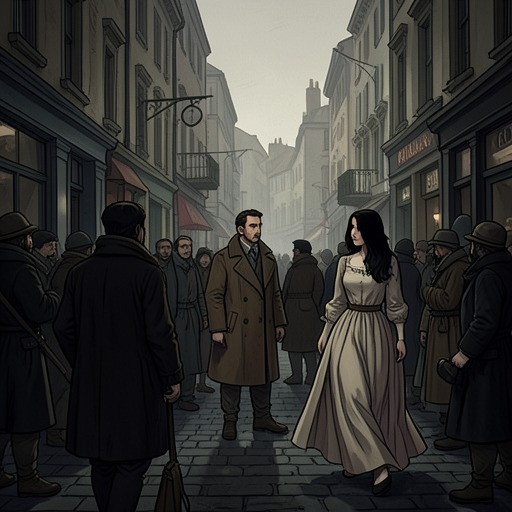
Before Elstir and his beloved married, Madame Verdurin tried to separate them. She denounced the woman to Elstir as stupid, dirty, immoral, and a thief, but failed to bring about a breach between the couple. The break that followed was instead between Elstir and the salon: he withdrew from the circle, and the narrator describes him as glad of the rupture, like a convert who blesses the illness or misfortune that has led him away from the world and toward salvation.
Madame Verdurin’s later account obscures her part in the conflict. When Cottard asks why she did not invite Elstir’s wife, she rebukes him and insists that she would never welcome such a woman. Yet she admits, indirectly, that she had once done everything in her power to bring Elstir back, even with his wife. Her disdain for the wife thus coexists with a wish to recover the artist whose departure had deprived the salon of a former member.
The hostess’s changing judgment
Madame Verdurin presents Elstir as a lesser artist than Ski: she calls Ski free to follow his fancy, while depicting Elstir as a dutiful, laborious painter who cannot leave his work. She then dismisses Elstir as out of date and unable to draw. Cottard finds it remarkable that a man of Elstir’s intelligence should have been so talented; Madame Verdurin abruptly rejects the premise, saying that Elstir had talent in abundance but no intelligence.
Her verdict, however, predates both the quarrel and her loss of interest in his painting. Even when Elstir belonged to the salon’s little group, she considered him unintelligent for spending whole days with women she regarded as foolish. She recalls that he wrote to and argued with women whom the circle would never have admitted. Her account reveals a social test disguised as an artistic judgment: in her eyes, choosing company she disapproves of is evidence against a person’s intelligence, even when his artistic ability is unmistakable.
The roses as a surviving bond
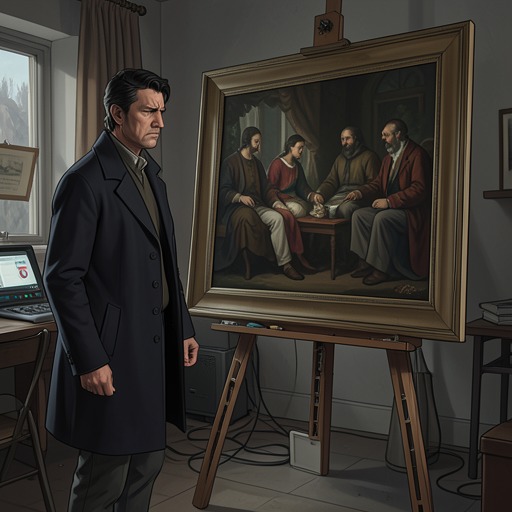
At La Raspelière, Madame Verdurin takes the narrator to see Elstir’s flowers. His large roses, painted in scarlet and creamy white, prompt her to remember watching him work and to praise his attention to their texture. The watercolor remains a gift from an artist with whom she once had a long friendship; the flowers preserve that connection after the social relationship itself has ended.
The painting also unsettles her claim that Elstir is finished. It does not simply copy a flower: Elstir first transforms what he sees through his inner vision, making the roses appear as a new variety that he has added to the family of roses. Madame Verdurin can admire the image and recall the painter’s hand, even as she tries to reduce his achievement to an obsolete phase of his career.
Departure, genius, and self-justification
Looking at the watercolor, Madame Verdurin ironically reports that Elstir believed her dinners had wasted his time and hindered the development of his genius. She immediately dismisses the idea, proudly asserting that her society could only have benefited an artist. The contrast is pointed: she remembers his flowers with real tenderness, yet refuses to grant that leaving her circle might have been necessary to his artistic growth.
The episode therefore makes the rupture visible in two incompatible forms. In Madame Verdurin’s speech, it is a grievance she can explain away by declaring Elstir unintelligent, outdated, and dependent on her salon; in the roses, it survives as a durable artistic gift that exceeds her account. The friendship has not been restored, but its material trace remains in the room, preserving both Elstir’s gift and the hostess’s inability to separate affection for the work from resentment over the artist’s departure.